Health & Wellness · Nail Care
Millions of people deal with thickened, discolored nails. Most spend months on treatments that only ever address what's visible on the surface — and by the end of this article, you'll know exactly why.

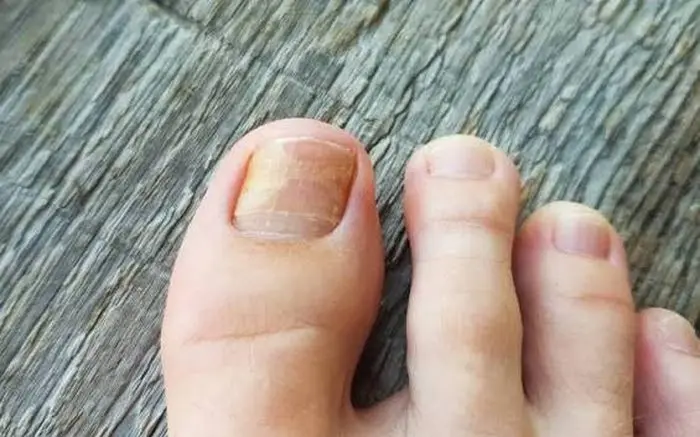
If you've been hiding your feet at the beach, keeping socks on around the house, or skipping the pedicure you used to enjoy, you already know this isn't really about a nail. It's about not wanting anyone to look.
And if you've already tried a topical solution from the pharmacy, or soaked your feet in vinegar for weeks, or simply waited for a new nail to grow in clean, only to watch the discoloration creep back, you also know something else: the usual advice isn't the whole story.
Stick with this for the next few minutes. The reason it keeps coming back is more specific than "fungus is stubborn" — and once you see it, the rest of this starts making a lot more sense.
The nail you can see is already dead tissue. What's actually causing the problem lives underneath it, in the nail bed, a warm, dark, enclosed space that's genuinely difficult for a surface treatment to reach in any meaningful concentration.
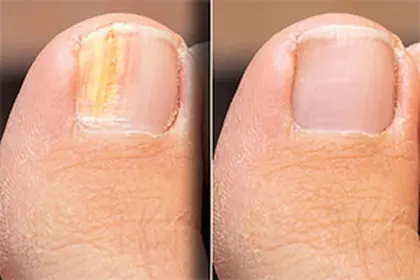
That's why a topical product can appear to work for a while. It cleans up the visible surface. But if the environment underneath hasn't changed, the new growth that comes in can be affected again.
There's a second layer most people never hear about. Nails are built from keratin, and keratin production depends on nutrients delivered through the bloodstream: circulation to the toes, the minerals available, and the strength of your body's own response in that tissue.
When those inputs are weak, the nail that grows in is often slower and more porous, which happens to be exactly the kind of environment where the problem thrives.
So there are really two separate questions, not one:
What's happening on the nail itself, right now, on the surface?
Why is your body producing nail growth that keeps letting the problem back in?
Keep those two questions in mind. Everything below is really just answering them, one at a time.
Most treatments on the market only ever answer the first question. That's usually where the frustration comes from, not from doing something wrong, but from using a one-sided tool on a two-sided problem.
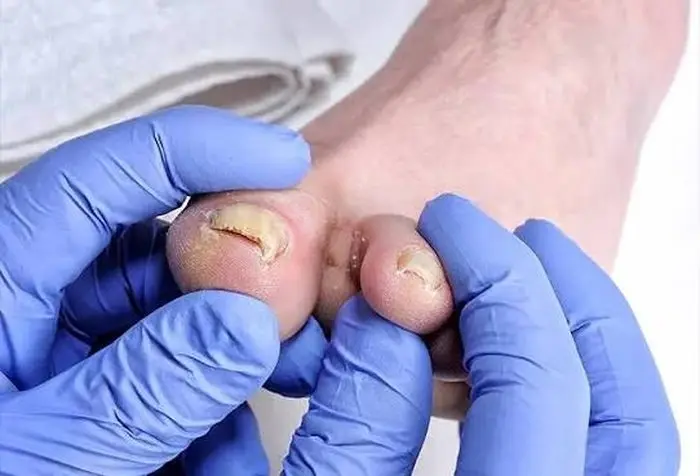
A closer look often shows more than one nail affected — which is one of the signs worth checking for below.
If you're going to spend money on this, these are the things worth checking before you do — and, as you'll see shortly, they're the exact list we used to evaluate the option below.
Does it address the nail bed, not just the nail plate?
Surface-only means surface-only results. If a product only describes what it does to the visible nail, that's worth noticing.Does it support the conditions your body needs to grow a healthier nail?
Circulation, keratin structure, and nutrient availability all play a role in what grows in next.Is the timeline realistic?
A toenail takes roughly six to twelve months to fully grow out. Anything promising results in days is telling you what you want to hear.Is there a real guarantee behind it?
Enough time to actually know if it's working, not just a short window that expires before you'd notice anything.One option we came across happens to check all four. Here's how it does it.
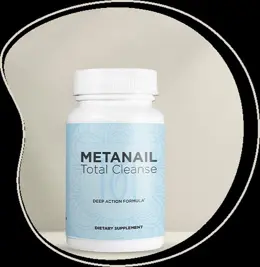
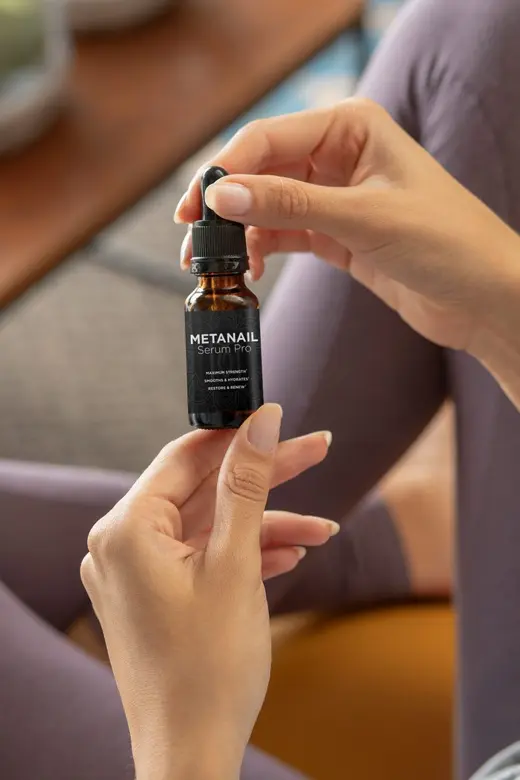
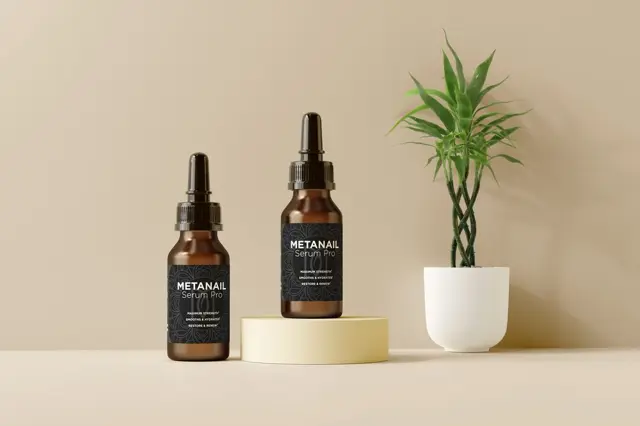
One formulation built around this two-sided idea is Metanail Complex. It pairs a topical serum with an internal nutritional component, rather than treating the visible nail in isolation.
The internal side comes as a daily supplement, working alongside the topical serum below, rather than replacing it. Together they're meant to cover both questions from earlier: the surface and what's feeding it.
We're not going to walk through the full ingredient breakdown here, the people behind it explain the reasoning behind each component, and what it's meant to do, better than a summary ever could. They've put together a short presentation that covers where the approach came from and, just as importantly, what it doesn't claim to do.
It runs a little long. Watch it somewhere you won't be interrupted, and give it the first few minutes, that's usually where it clicks.
See how the two-part approach works →
Free to watch. No obligation.

It's a fair question, and worth doing the arithmetic on. A single podiatrist consultation in the US typically costs more than that before any treatment is even prescribed, and laser sessions usually run several hundred dollars each, often needing more than one visit.
The multi-bottle packs bring the price down to around $49 per bottle, which matters given that this is a months-long process, not a one-time fix.
Orders ship from within the United States, most domestic orders arrive in under a week. International shipping (Canada, UK, Australia) usually takes 12 to 20 business days. Full details, including current shipping fees, are in the shipping policy linked below.
It isn't a cure, and anyone selling it as one is overselling. It's a nutritional and topical support approach. Nails grow at their own pace regardless of what's applied to them, and no product changes that basic biology.
What a formulation like this can do is support the conditions under which a healthier nail grows in over time. That's a narrower claim than "cure," and it's the honest one, which is exactly why we're comfortable pointing you toward it.
A 60-day money-back guarantee. That's enough time to actually tell whether it's working for you, applied daily, before you have to decide either way.
You've now seen why this happens and what an approach actually needs to do about it. The next step just shows you the how.
See how the two-part approach works →You'll be taken to a short video that explains the full approach.
The presentation walks through exactly how the topical and internal components work together, and what to realistically expect on the timeline above.
Watch the presentation →